Mill
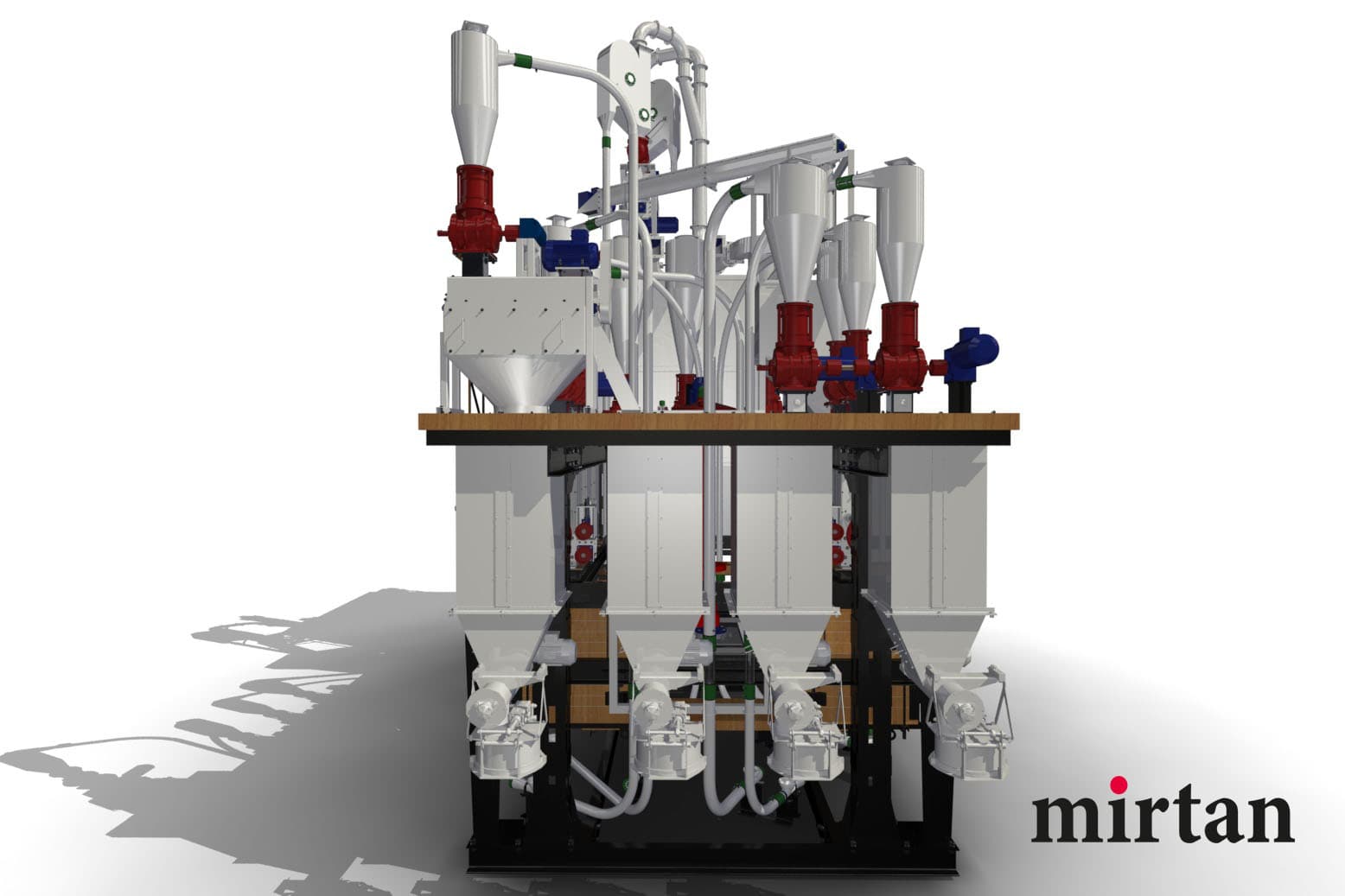
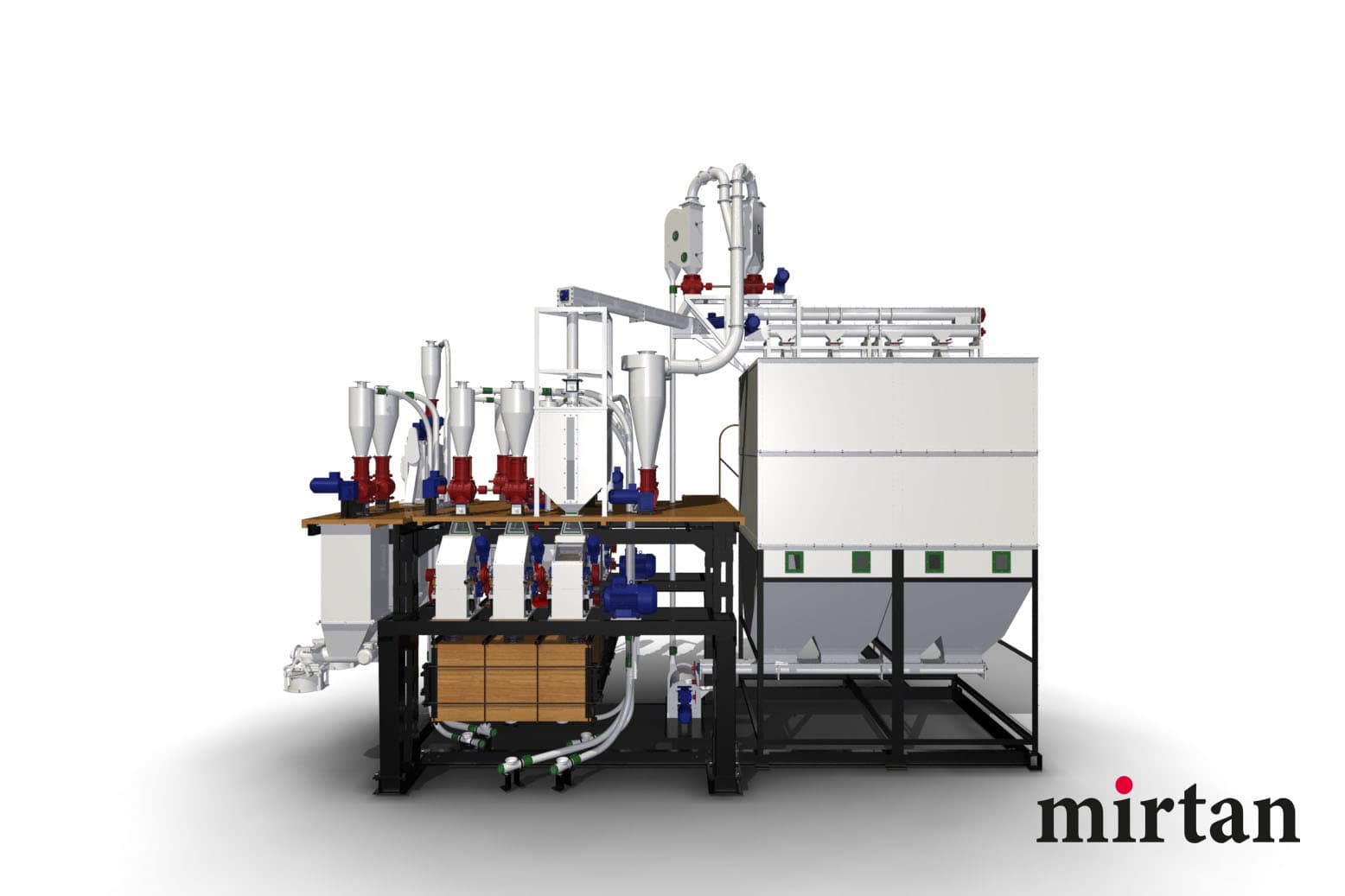
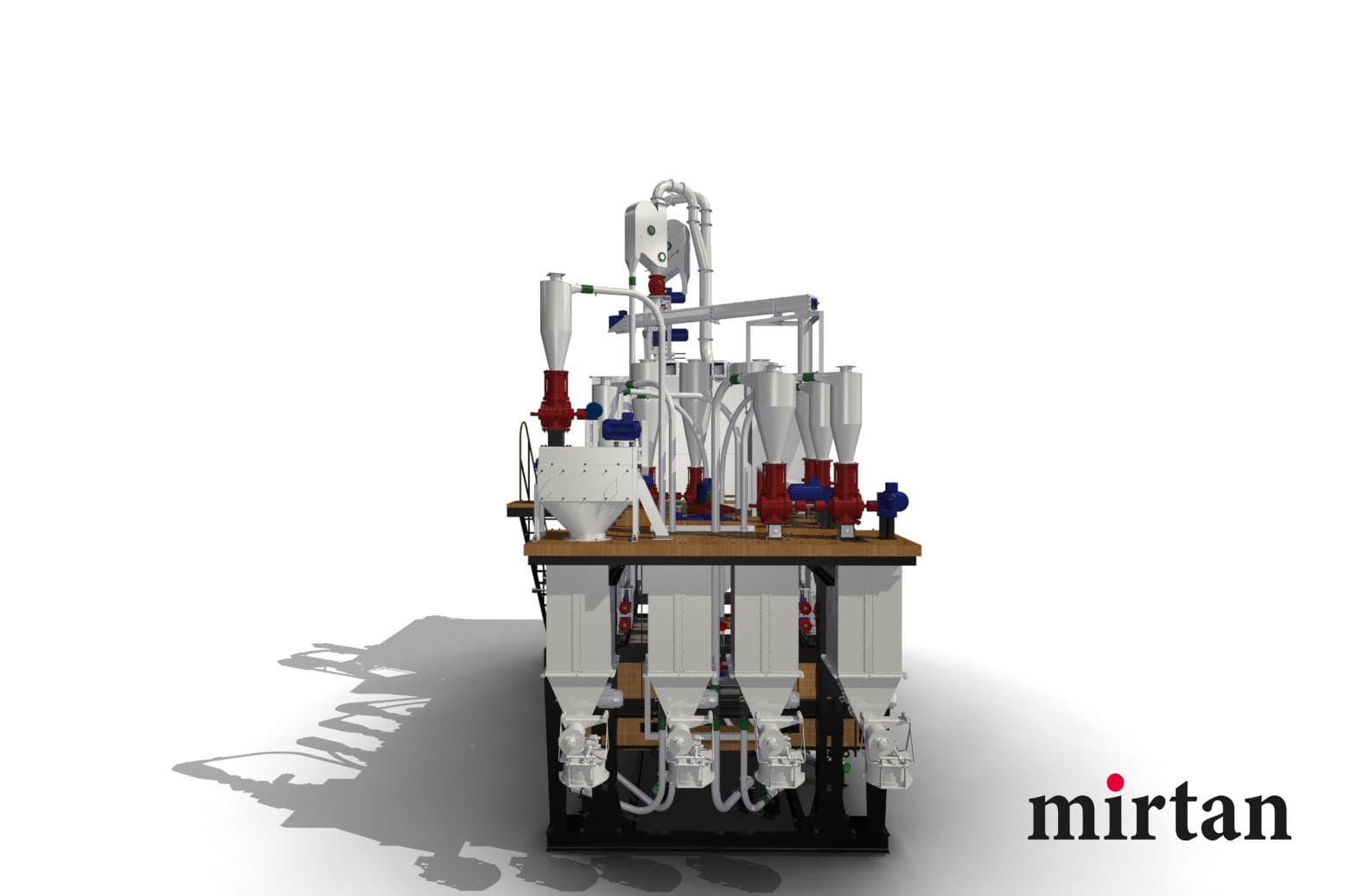
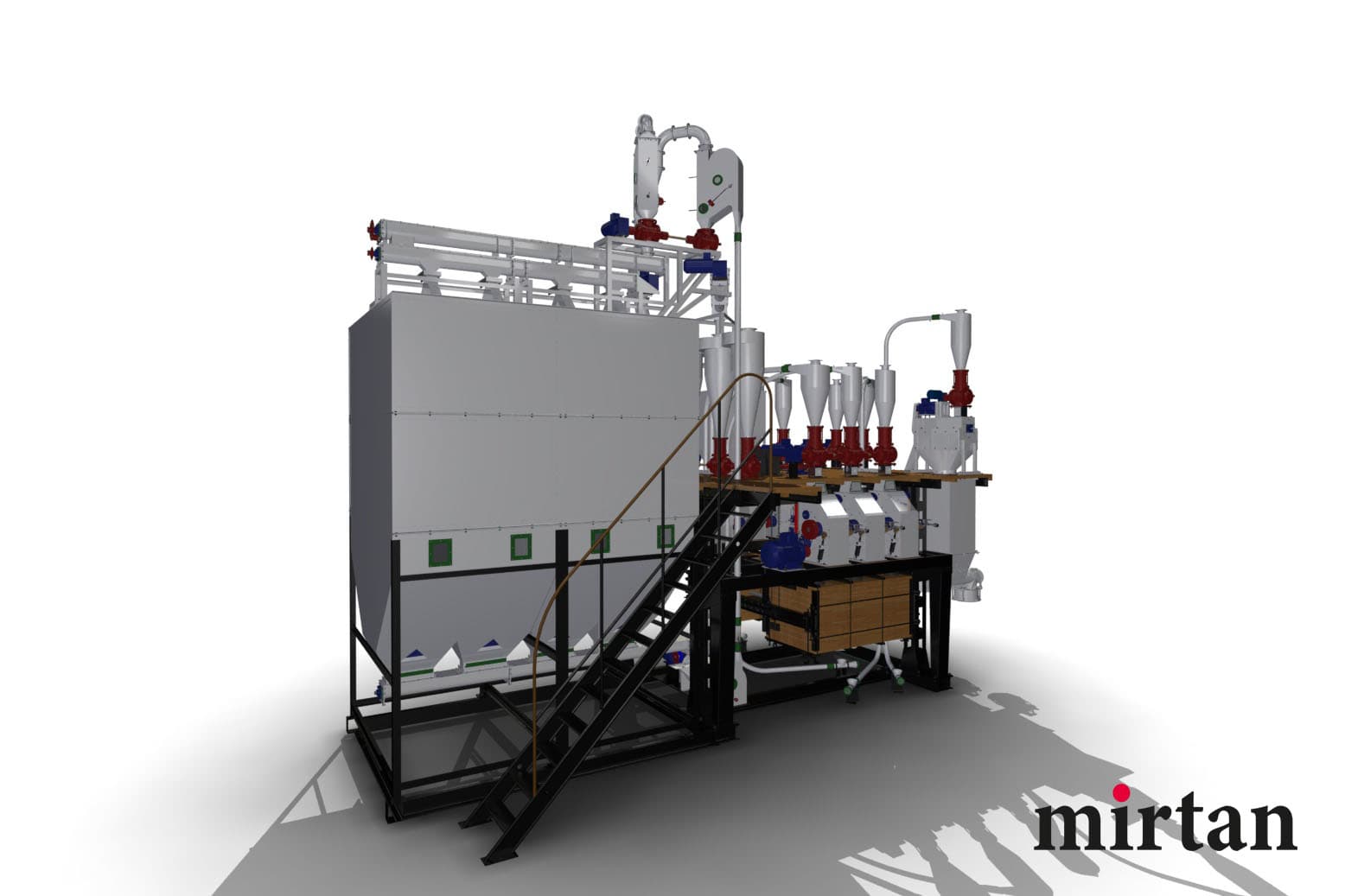
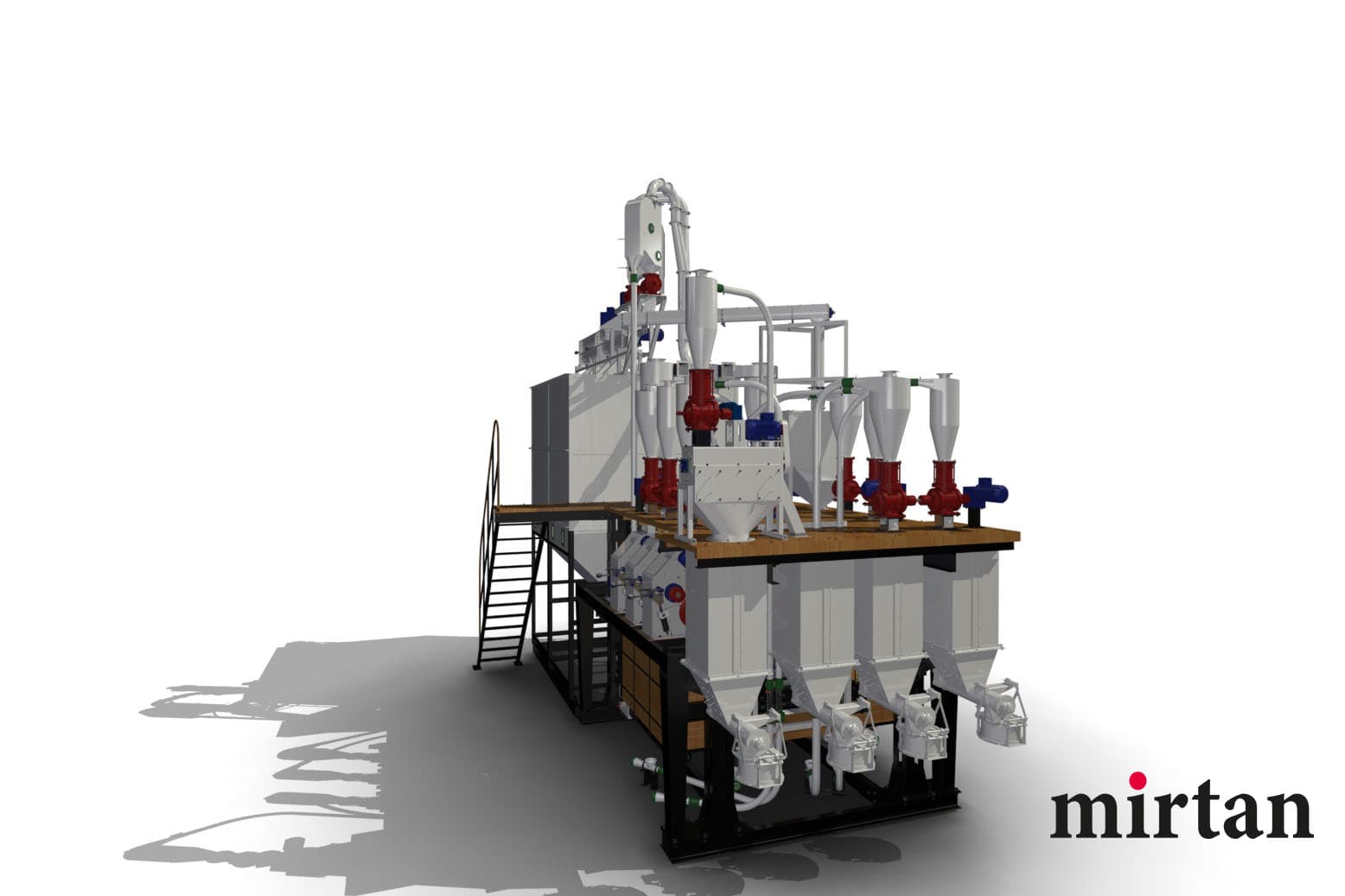
MIR aggregate mills are universal modular plants for the production of flour - classic wheat, whole grain, gluten-free, etc., from cereals and leguminous crops such as wheat, rye, corn, millet, buckwheat, rice, spelt, dried peas, lentils, etc
A unique feature of MIR mills is the combination of roller and millstone groups with the separation of grinding products in a sieve, the flour produced has the advantages of both types of grinding - high baking qualities inherent in millstone flour and the size and presentation characteristic of flour produced in a roller mill. The mills use batch sieving in which sets of sieves are installed to produce flour of different fractions at the request of the Customer. The millstones have the structure and shape of notches that make it possible to obtain very fine flour. The mills allow processing of raw materials with a fat content of up to 7% and a humidity content of up to 18%.
Additional information
The capacity of the mills is 15, 20, and 25 tons per day.
Advantages of MIR Mills:
High energy efficiency: The specific energy consumption for processing wheat into bakery flour ranges from 42 to 53 kWh per ton of processed grain.
Short start/stop time: This significantly saves energy and raw materials.
Ease of maintenance: A single unit can be serviced by two people.
Modular design: Users can configure the mills optimally, and the functionality can be expanded with additional equipment, such as stone mills, entoleters, screening machines, bulk flour storage units, and more.
Scalable setup: Multiple units can be installed using a single grain cleaning and flour discharge section.
Automation options: Full process automation minimizes human intervention.
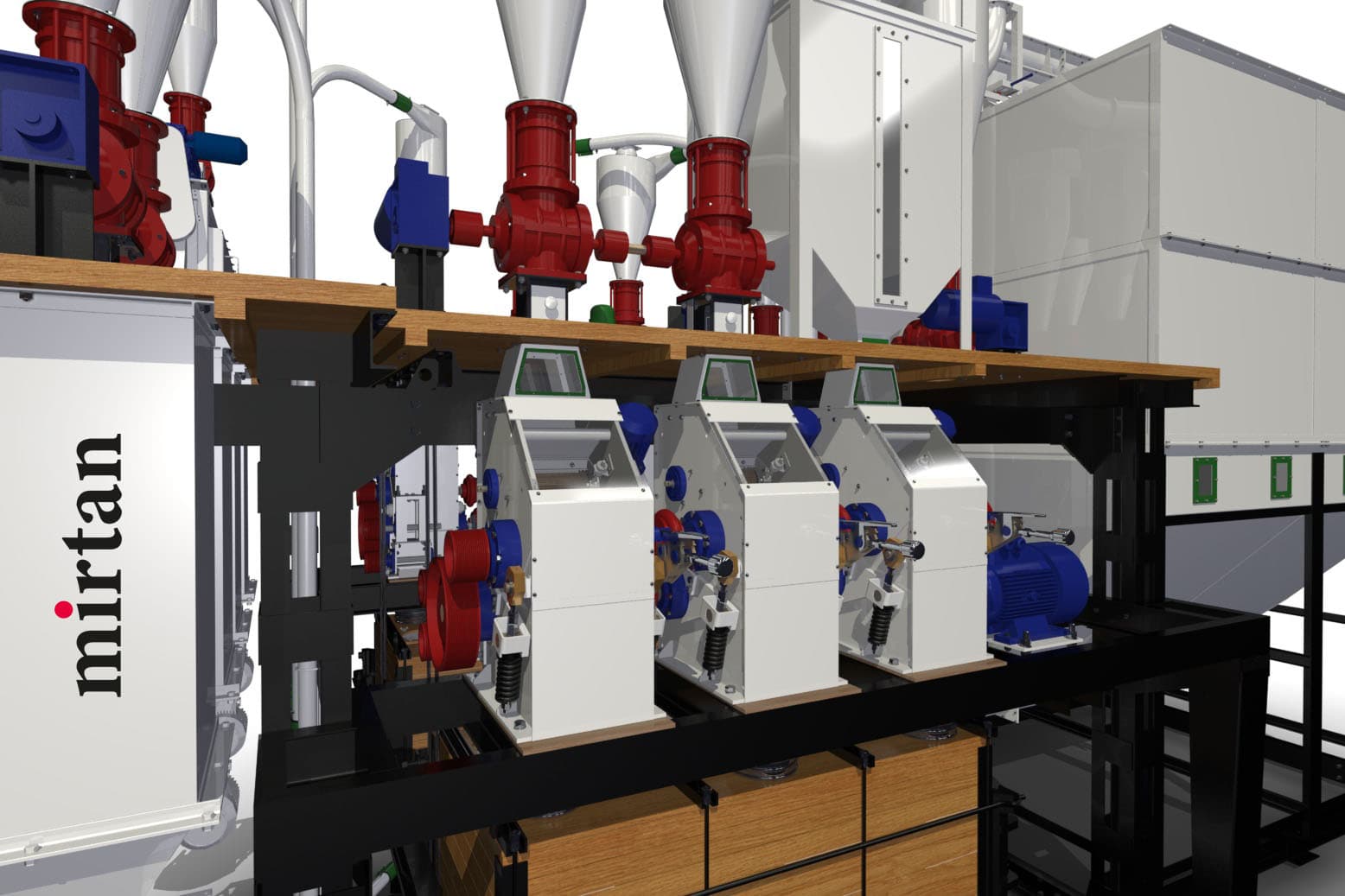
The basic version of the mill produces wheat flour of three grades: premium, first and second. Grain is ground in six roller machines with a roller length of 250, 320 or 400 mm and a diameter of 250 mm. The total yield of wheat flour in the basic version is 75%. Flour of the highest grade - 50-55%, 1st grade - 20-25% and 2nd grade - 5% (depending on the raw material). The milling department is equipped with a batch sifter with a process flow chart for the grinding grade ordered by the Customer. It is also possible to change the percentage of output for each grade at the Customer's request and according to the quality conditions of the original grain.
For stone flour production, the mills combine roller mills and stone mills. Roller mills are used in the break systems, while stone mills are installed in the reduction systems. A bypass system allows quick switching between traditional bakery flour milling and whole grain (or gluten-free) milling.
The grain cleaning section provides the following process steps:
cleaning in a grain separator;
cleaning in a trieur (cockle cylinder);
cleaning in a magnetic separator;
scouring machine (with a mesh shell);
aspirator with a closed air cycle.
Grain is received at the mill in the receiving bin, from where it is fed by a bucket elevator to the grain cleaner (the receiving section and bucket elevator are not provided in the basic version). The finished grinding mixture is fed to the receiving bin. At the request of the customer, for an additional fee, it is possible to equip the mill with a receiving section with the ability to form grinding mixtures. The capacity of the silos of such a section can vary from 25 to 120 tons.
The cleaned grain is transferred to the humidification section, where it is moistened and sent to the bins for the first tempering. The section is equipped with bins that provide 24 hours of tempering with continuous operation of the mill.
The tempered grain is cleaned again in a scouring (brush) machine and an aspirator, then re-moistened and sent for the second tempering (for 20-30 minutes). The grain prepared in this way is sent to the milling section.
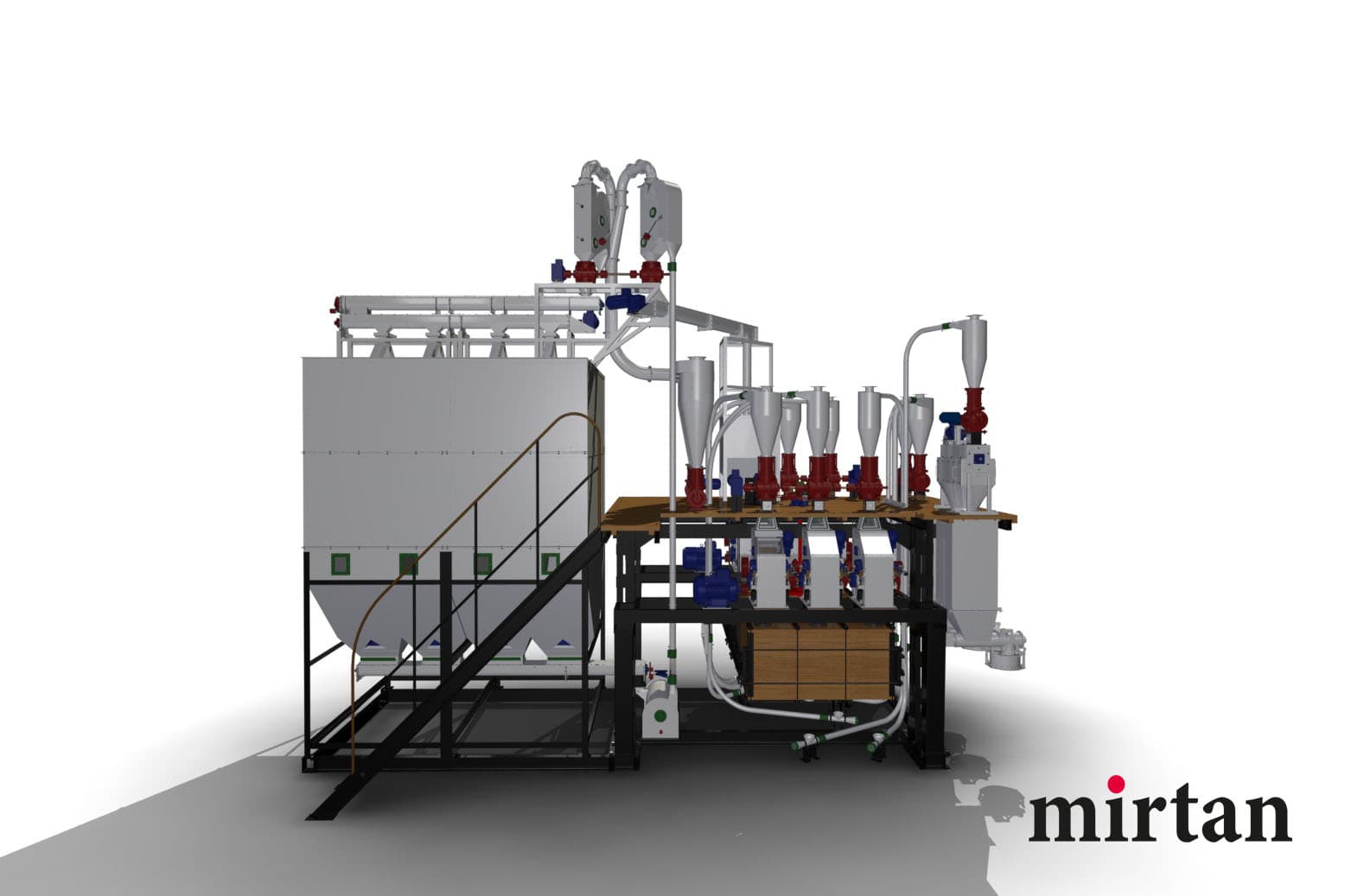
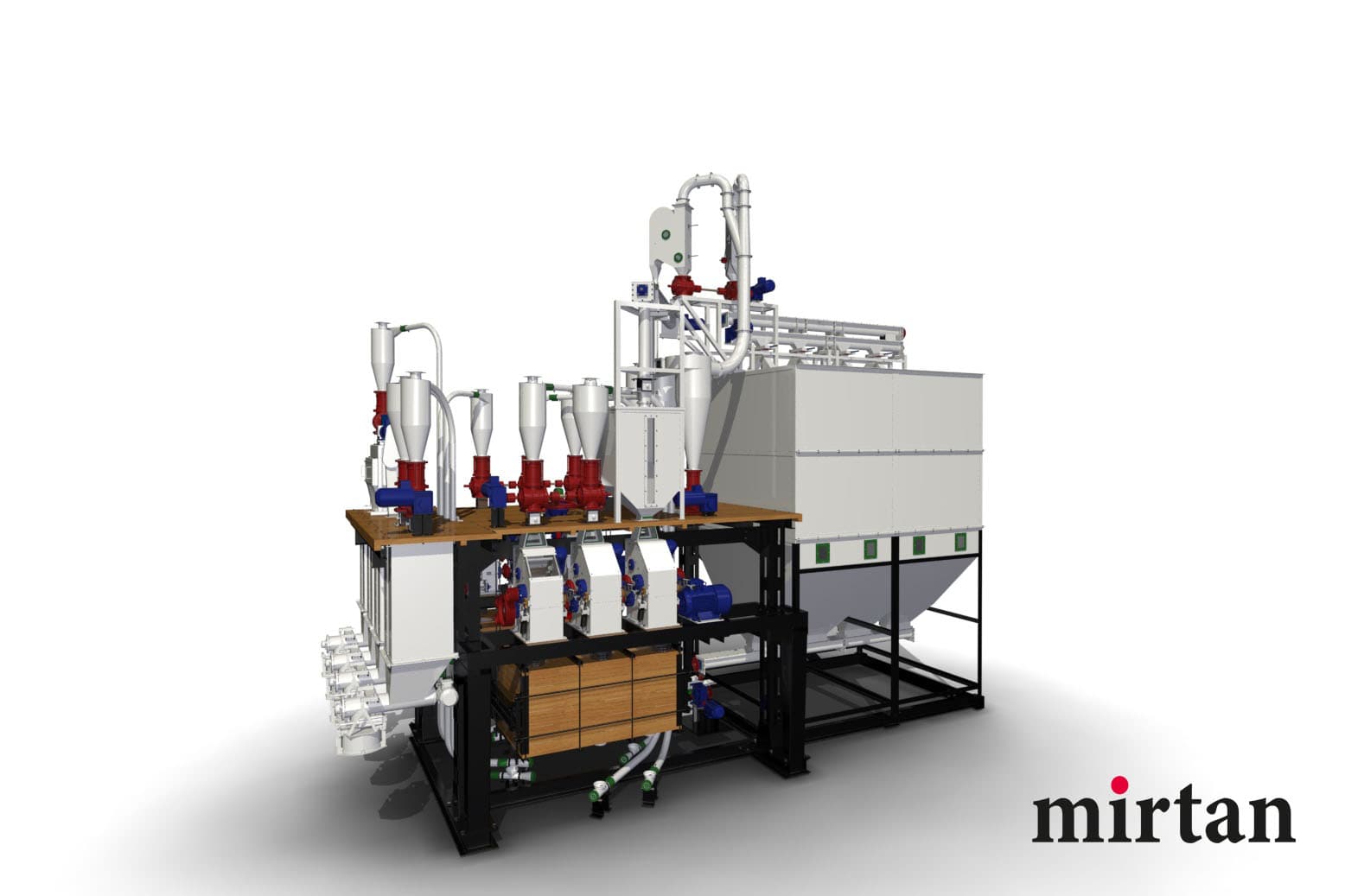
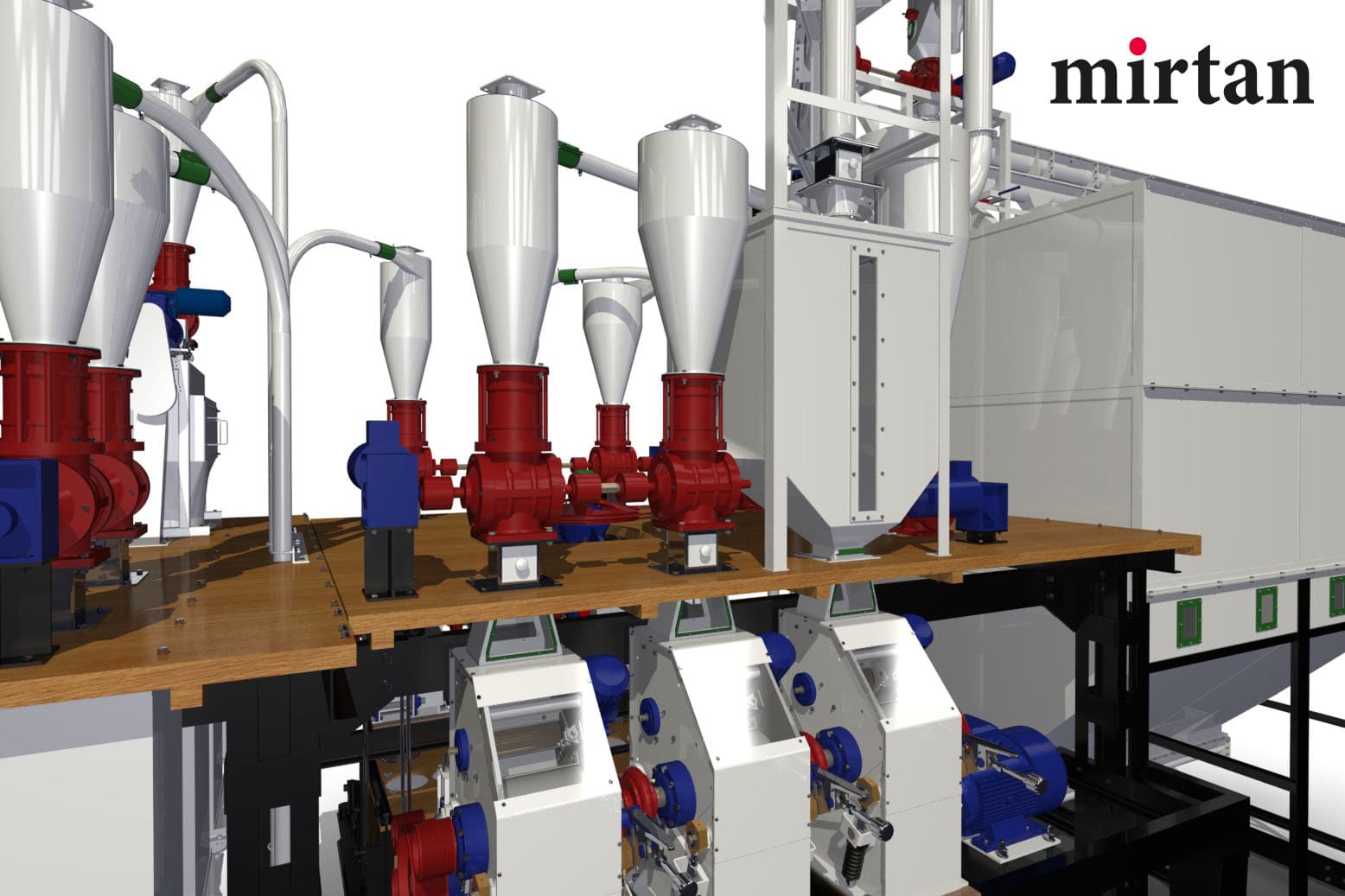
The milling section consists of 6 roller machines, 1 six-receiver batch-type sifter and one grinding machine. The milling process comprises three break systems and three reduction systems. Flour from each of the systems is sent in separate streams to the sifter transport box. The flour formed in this way is sent by pneumatic transport to the bagging bins.
The bagging bins are accumulators with a capacity of 100 kg each. At the bottom of the flour bins there is an auger and a bagging pipe for a standard bag (25-50 kg). The bagging department is equipped with weigh batchers for flour of the 1st and highest grades. Bran and the second grade are packed into standard bags without weighing.
The mill is equipped with an automatic control system (ACS). ACS is designed to control the switching on and off of departments, units and transport devices, control the state of the technological chain of equipment and ensure mutual interlocks of machines, as well as to implement the functions of accounting for the manufactured products, diagnostics, control and recording of the operating modes of individual units and assemblies of the mill.