Scouring machine
The scouring machine is designed to separate the kernel particles from the shells during flour production.
| Productivity, tons/hour, not less than | 0,3-0,55 |
|---|---|
| The gap between the rotor and the screen surface, mm | 10 |
| The area of sieves, m² | 0,36 |
| The frequency of rotation of the beater rotor, rpm | 620 |
| Electric motor power, kW | 1,1 |
| Electric motor rotation speed, rpm | 940 |
| Service life, years | 13 |
| Overall dimensions, mm, max: | |
| Length | 1110 |
| Width | 475 |
| Height | 1030 |
| Weight, kg, not more than | 110 |
Additional information
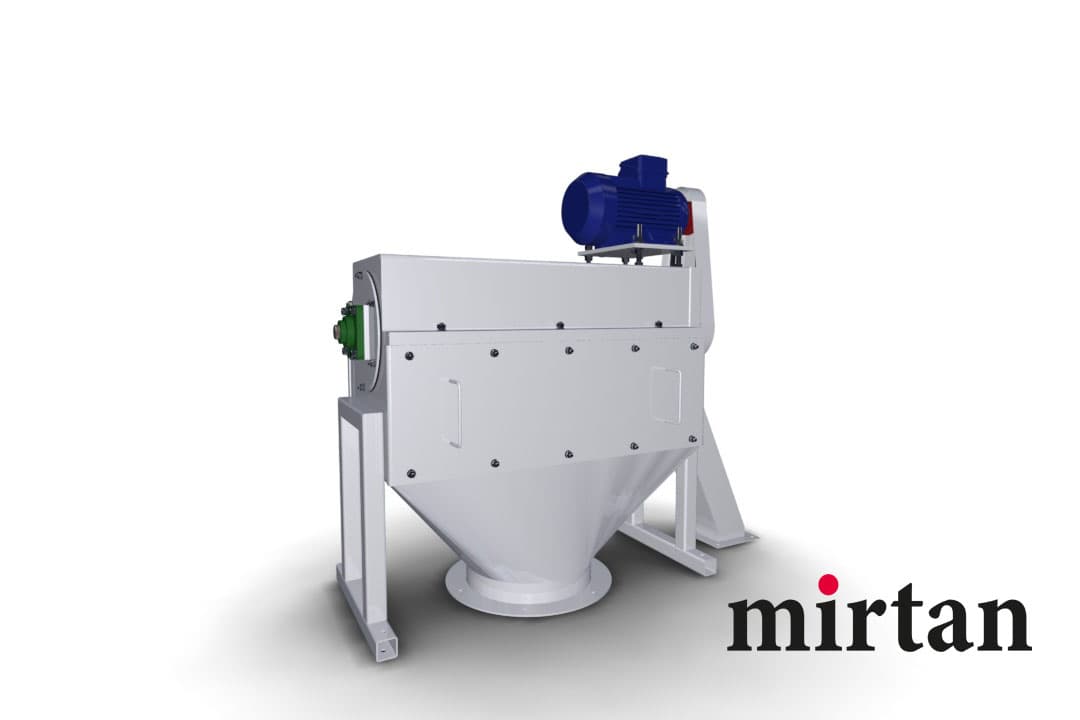
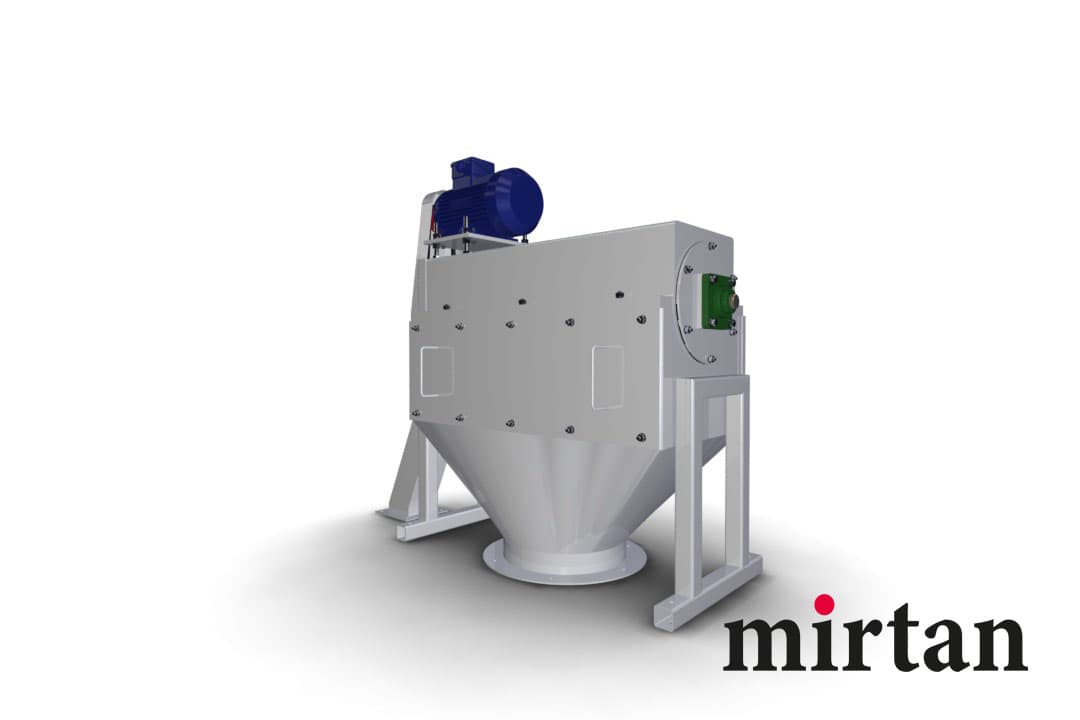
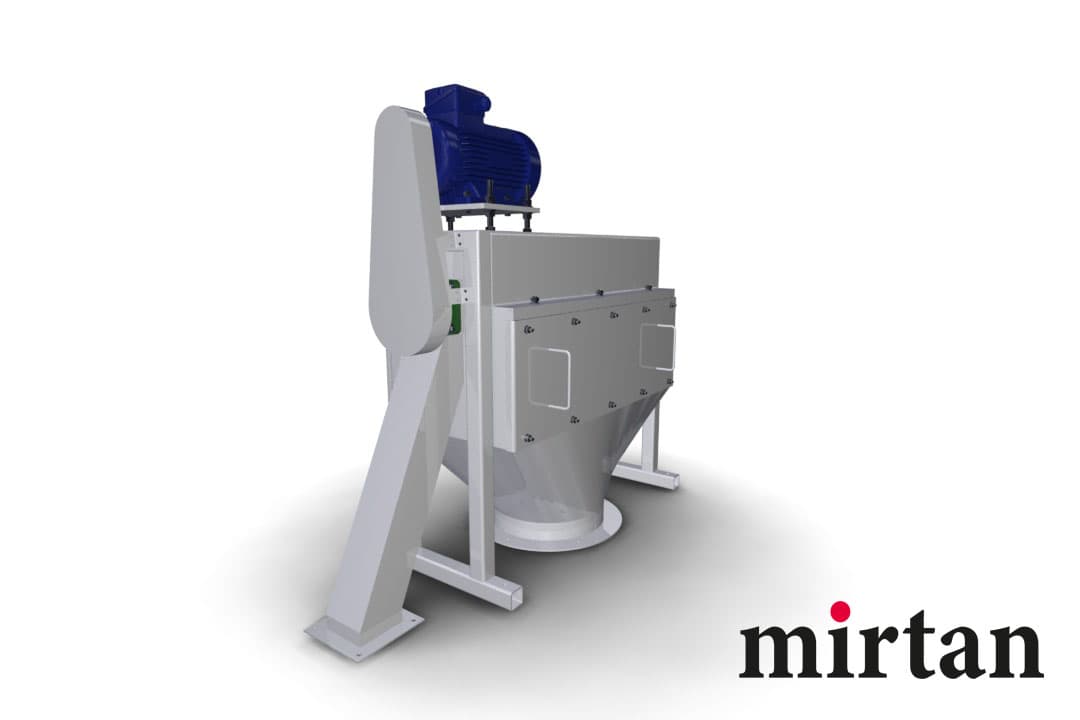
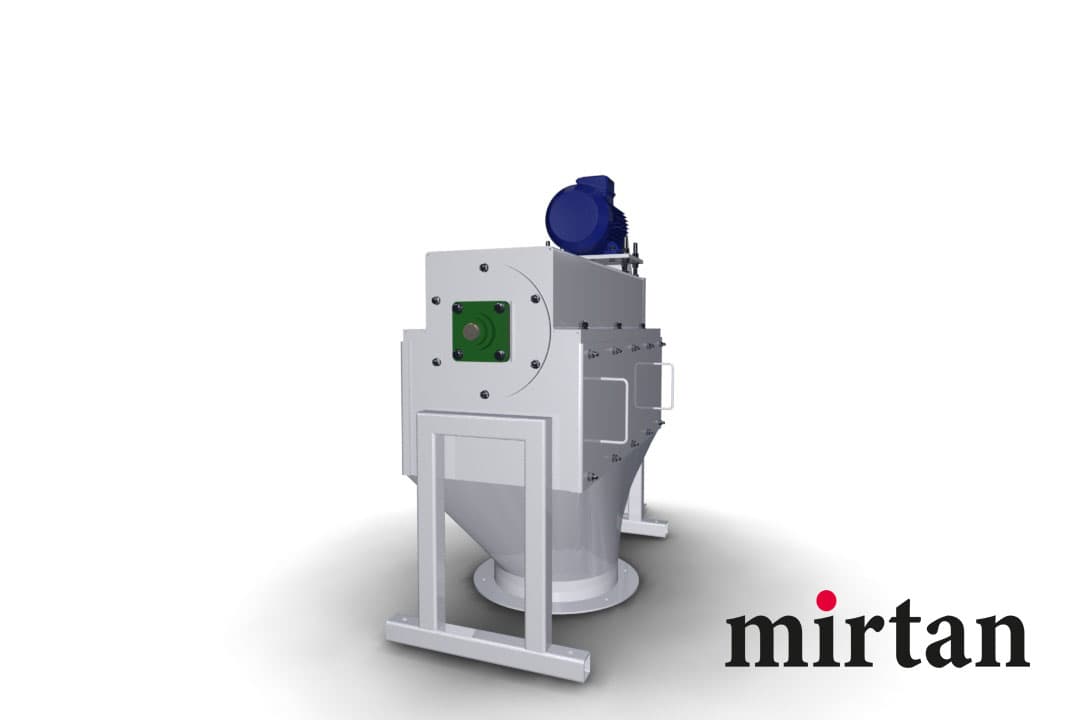
The machine consists of the following main components: a housing, an outlet housing, a beater rotor, a perforated semicylinder, a hopper, a V-belt drive, a motor drive, and protective covers. The housing, made of sheet metal, serves as the base for attaching all components of the scouring machine.
The beater rotor consists of a shaft with beaters mounted on it. The shaft is supported by self-aligning bearings. A drive pulley is installed on the cantilevered part of the shaft.
The perforated semicylinder is made of a wooden frame with a mesh attached to it. The rotor is driven by an electric motor through a V-belt drive.
The technological process in the machine operates as follows: The product enters the working zone through the inlet pipe, located between the rotor and the perforated semicylinder. It is then advanced axially by the beaters, undergoing repeated impacts and friction. During this process, endosperm particles are separated from the bran, pass through the holes in the mesh, and exit through the discharge cone. Larger bran particles are discharged through the outlet of the perforated semicylinder.